Choosing substitution or integration by parts
5-minute read · 8 sections
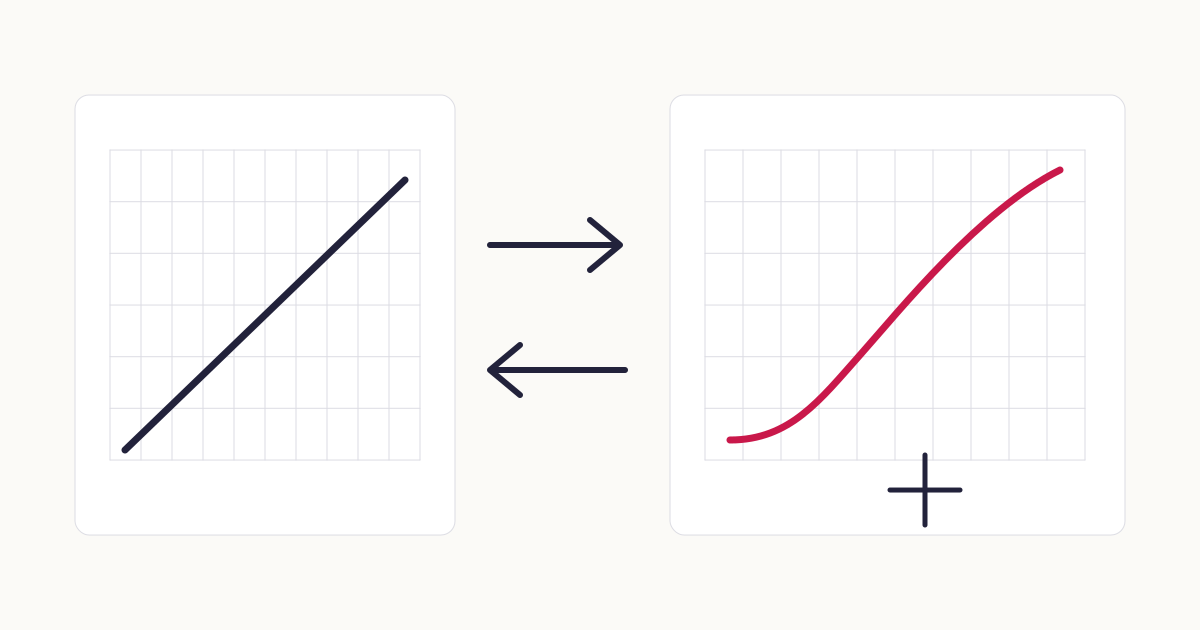
A product sign does not automatically call for integration by parts. In 2x cos(x^2), the factor 2x is the derivative of the inner x^2, so substitution is the useful first move. The shape of the expression matters more than its length.
Read the whole expression before choosing a rule
I start by asking whether the expression is a sum, a constant multiple, a composition or a product of two genuinely variable factors. Sums can often be integrated term by term, and constant factors can be taken outside the integral. That reduces the problem before a more elaborate technique becomes necessary.
For 3x^2 + 2sin(x), the power and trigonometric rules already suffice. A primitive is x^3 − 2cos(x), before adding C. Differentiation returns 3x^2 + 2sin(x). Introducing substitution or parts here would add work without clarifying the calculation. A simple method that covers the whole integrand is my preferred starting point.
Substitution accounts for an inner derivative
In 2x cos(x^2), let u = x^2. Then du = 2x dx, so the integral becomes ∫cos(u) du. A primitive is sin(u), and substituting back gives sin(x^2) + C. Differentiating that result produces cos(x^2) × 2x, which reconstructs the original product.
The derivative factor need not be written immediately beside its inner function, but it must be present with the correct scale. If the integrand is x cos(x^2), then du still equals 2x dx and the missing factor is handled by 1/2 outside the transformed integral. The primitive becomes sin(x^2)/2 + C. Forgetting that half is a common way to obtain a plausible-looking but incorrect formula.
Linear substitution has a predictable scale
For sin(2x − 1), choose u = 2x − 1, so du = 2 dx. The transformed integral is one half of ∫sin(u) du. A primitive is −cos(u)/2, hence −cos(2x − 1)/2 + C. Its derivative is sin(2x − 1) × 2/2, giving the correct integrand.
Likewise, exp(3x + 2) integrates to exp(3x + 2)/3 + C. The general pattern divides by the nonzero inner slope. A zero slope is a constant-expression problem instead, so the formula with division by that slope must not be applied blindly. In the calculator, a constant parameter can control that slope; changing its value changes which rule is valid numerically.
| Integrand | Inner derivative | Primitive before C |
|---|---|---|
| sin(2x−1) | 2 | −cos(2x−1)/2 |
| exp(3x+2) | 3 | exp(3x+2)/3 |
| 3/(2x−1) | 2 | 3 ln(abs(2x−1))/2 |
Integration by parts exchanges one integral for another
The parts identity is ∫u dv = uv − ∫v du. It is useful when differentiating one factor simplifies it and integrating the other factor is manageable. In x exp(x), take u = x and dv = exp(x) dx. Then du = dx and v = exp(x).
Substitution into the identity gives x exp(x) − ∫exp(x) dx. The remaining integral is exp(x), so the primitive is exp(x)(x − 1) + C. Differentiate the product: exp(x)(x − 1) + exp(x) = x exp(x). The cancellation of the two plain exp(x) terms is the check that the subtraction has the correct sign.
A logarithmic factor suggests a different choice
For x ln(x), take u = ln(x) and dv = x dx. This choice gives du = dx/x and v = x^2/2. The new integral is ∫(x^2/2)(1/x) dx = ∫x/2 dx, which is simpler than the original product on the positive real domain.
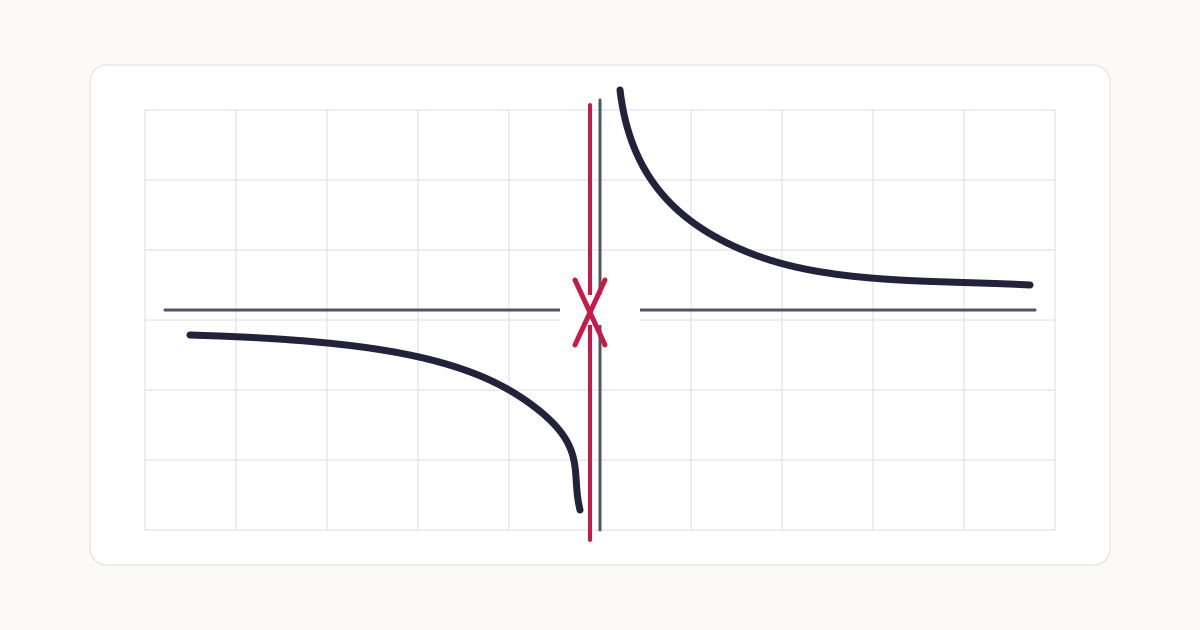
The result is (x^2/2)ln(x) − x^2/4 + C. Differentiating the first term gives x ln(x) + x/2; differentiating the subtracted term gives −x/2. The extra terms cancel. The real logarithm still requires x > 0. Finding a primitive has not removed the original domain restriction.
Choose factors for the next integral, not just the first line
A useful parts choice produces a remaining integral that is easier to evaluate. For x exp(x), differentiating x shortens it to 1. Choosing exp(x) as u would preserve an exponential factor while integrating x creates x^2/2, making the next product more complicated. I inspect that remaining integral before committing to a choice.
Some problems require repeated parts, a trigonometric identity, partial fractions or a more general substitution. A mnemonic for selecting u is only a starting suggestion; it cannot guarantee progress. If the next integral becomes harder, reconsider the structure. The current browser engine supports selected parts patterns, not every sequence a full computer algebra system might explore.
Differentiate the complete result
- Keep parentheses around composite arguments and denominators.
- Differentiate every term of the proposed primitive, including its constants and scale factors.
- Apply product and chain rules before simplifying.
- Compare with the original integrand on its real domain.
- Add C only after you have checked the nonconstant part.
A sampled derivative check can expose an error in a scale factor or sign. It cannot establish that two expressions agree everywhere, especially near excluded points. I use the calculator’s samples as a quick check and the derivative calculation as the explanation. Two primitives differing by a constant can both be valid, so comparing their visible forms alone may be misleading.
A recognized pattern is different from a general method
The integral calculator recognizes linear substitutions and specific elementary products. The nonlinear substitution 2x cos(x^2) above demonstrates the method mathematically; it is not promised as a symbolic match in this limited engine. When a formula is unsupported, a finite definite calculation can still try a labelled numerical estimate.
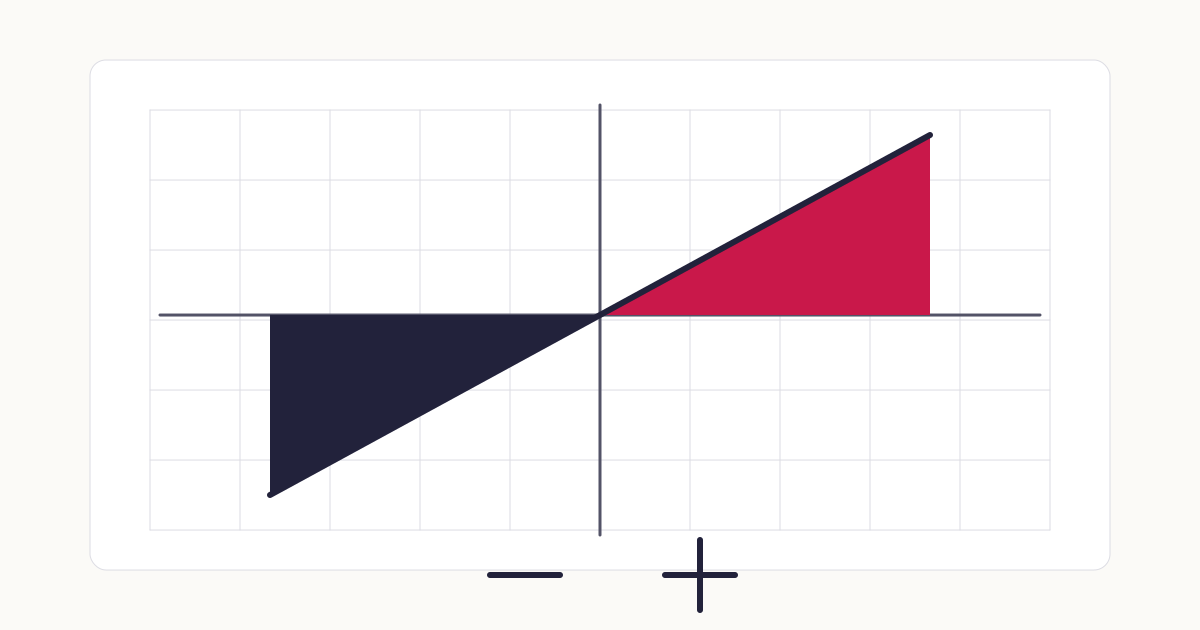
Keep that boundary in mind when practicing. A failed pattern match does not prove that an elementary answer is impossible. For interpreting a definite result, continue with signed area and reversed bounds. Before applying endpoint subtraction, inspect domain and numerical checks. Choosing a method does not settle those separate questions.
Questions and answers
Does every product need integration by parts?
No. A product may contain an inner function’s derivative and be better handled by substitution.
Why divide by the slope in a linear substitution?
If u = ax+b, then du = a dx. For a nonzero constant a, dx = du/a introduces that factor.
Does the tool recognize every substitution shown in this guide?
No. The nonlinear substitution example explains the mathematical method. The current symbolic engine supports a limited set of patterns, including linear substitutions.